Company sign-in
Use your identity provider’s accounts and sign-in policies. Test the chosen configuration before rollout.
Aegis separates the rules people set from the work agents perform. Review access controls, data flows and deployment settings against your own requirements.
Aegis supports single sign-on through SAML and OpenID Connect. Confirm your identity provider, account setup and access policies during the technical review.
Use your identity provider’s accounts and sign-in policies. Test the chosen configuration before rollout.
Organizational authority and data clearance are separate checks. A senior job title does not automatically unlock sensitive information.
Records are scoped to their organization. Include isolation, administrative access and audit permissions in your deployment review.
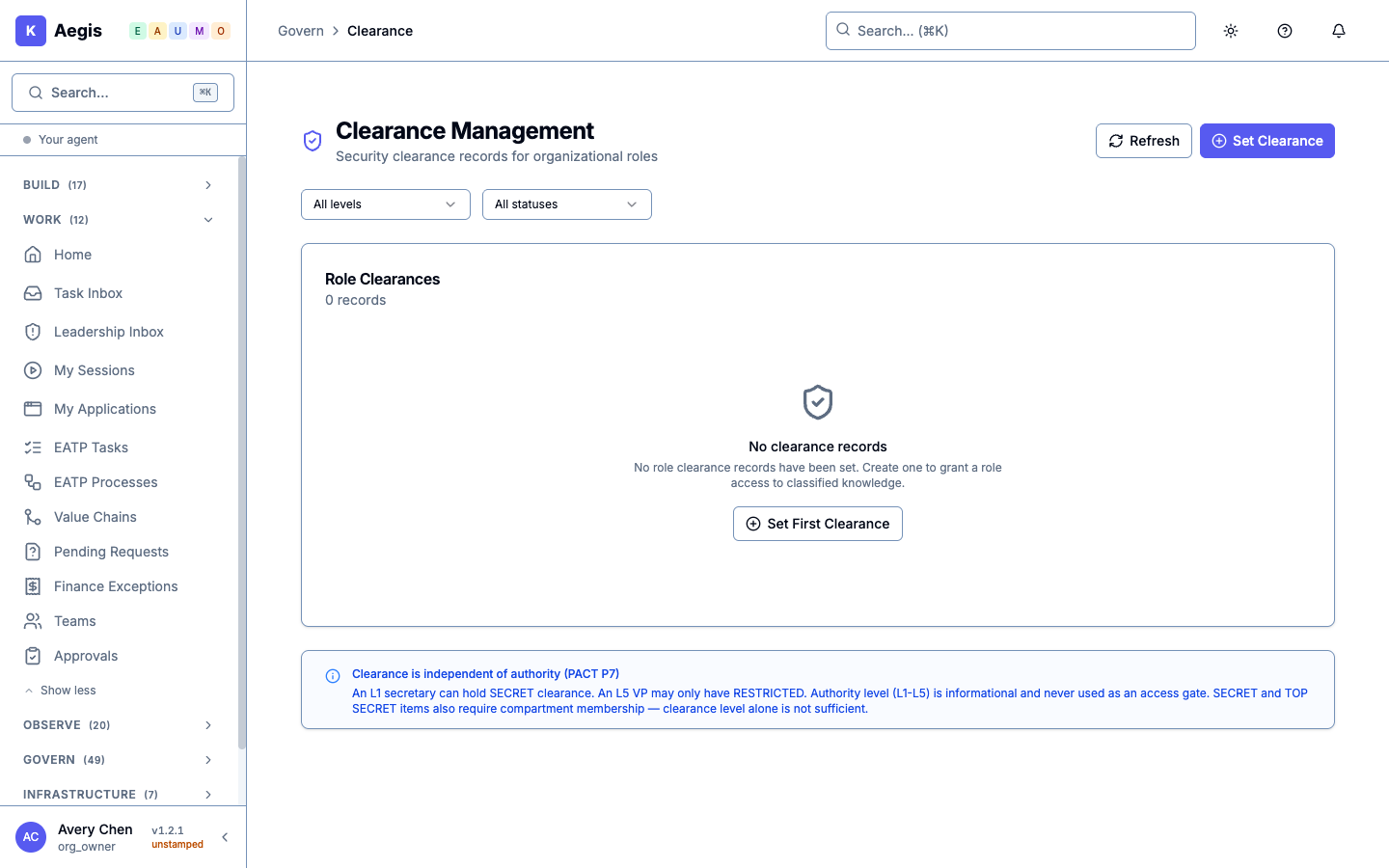
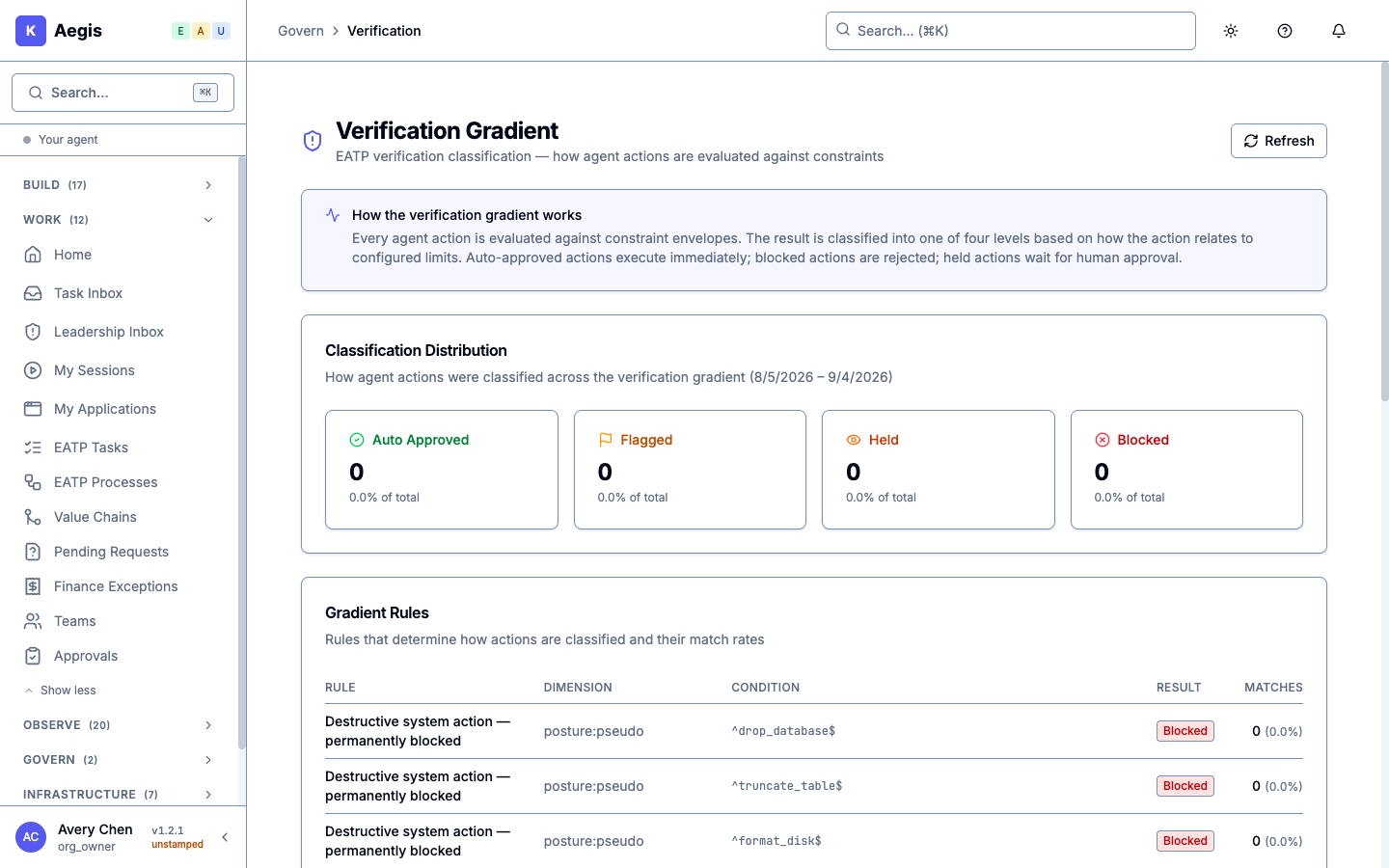
Test permitted, held and blocked tasks on the runtime and operations you intend to use. Confirm which checks happen before execution and which inspect activity afterward.
Self-hosted and private-cloud deployments are supported. Agree the hosting model, region and operating responsibilities for your deployment.
Run Aegis on infrastructure you manage. Confirm installation, updates, backups and monitoring responsibilities.
Deploy in your cloud account and chosen region, using your network and identity controls.
Discuss managed hosting, supported regions, support terms and responsibility for day-to-day operations.
Review AI and connector data flows separately. Hosting Aegis in your network does not by itself keep every request there. Data sent to an external AI provider or connected service follows that provider’s configuration and terms.
Organization structures can be imported from CSV, SCIM user payloads or native Aegis exports. Imports create a structure for review; roles and clearances need reassessment before live work. This does not establish continuous directory synchronization.
Enterprise deployments can assign an organization to a dedicated, operator-provisioned data store. This option does not imply a separate complete infrastructure stack or a live migration from a shared store.
Check transport encryption, encrypted storage and the handling of keys and credentials in the deployment you will use.
Use TLS for connections and review the network routes to AI providers and other services.
Verify encryption for databases, file storage and backups in the chosen environment.
Supply required secrets through deployment configuration or key management. Review startup checks and how missing or rotated keys are handled.
The product records actions and reports which checks are active. Screenshots from a demo are useful for review, but do not establish the security of your deployment.
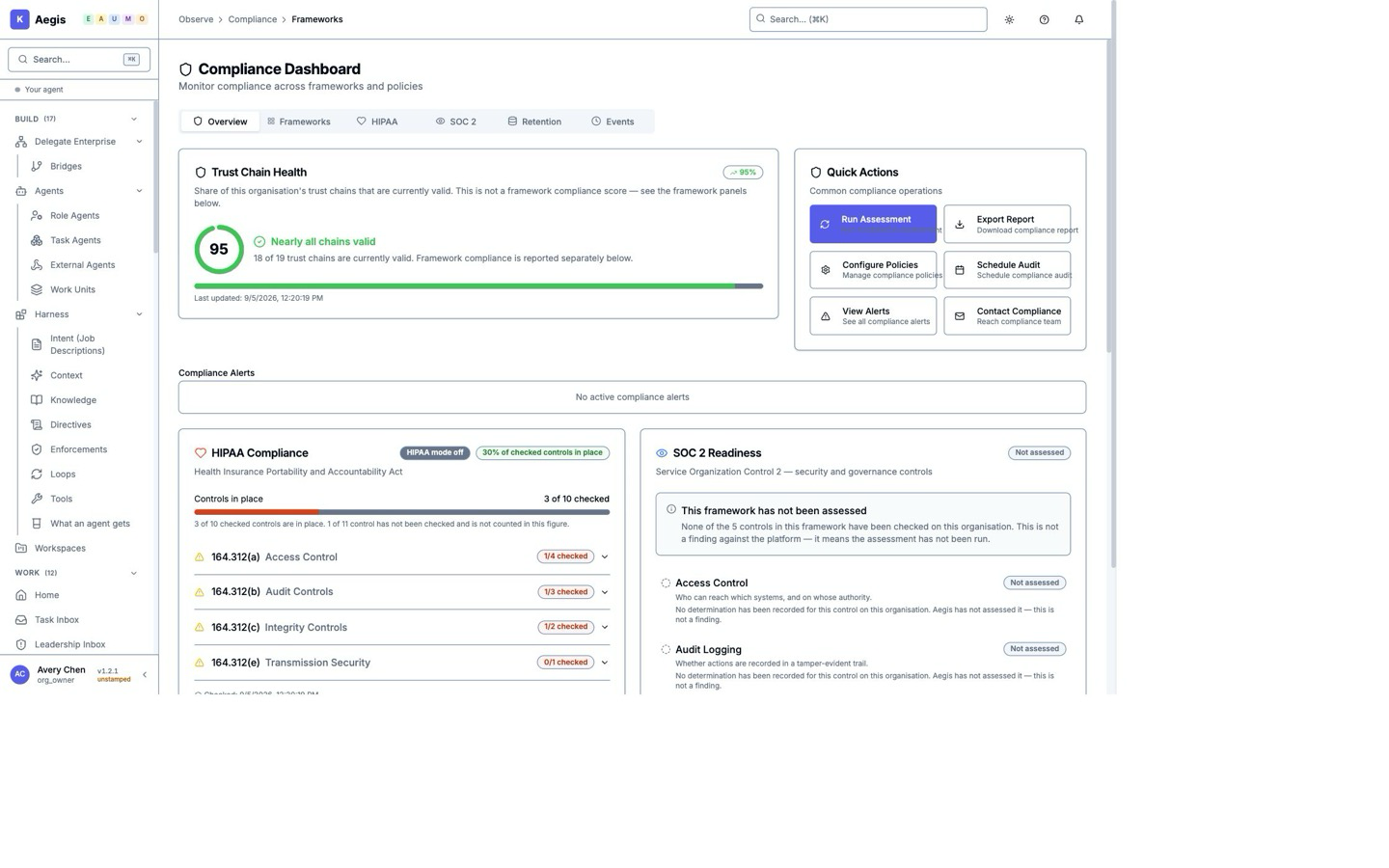
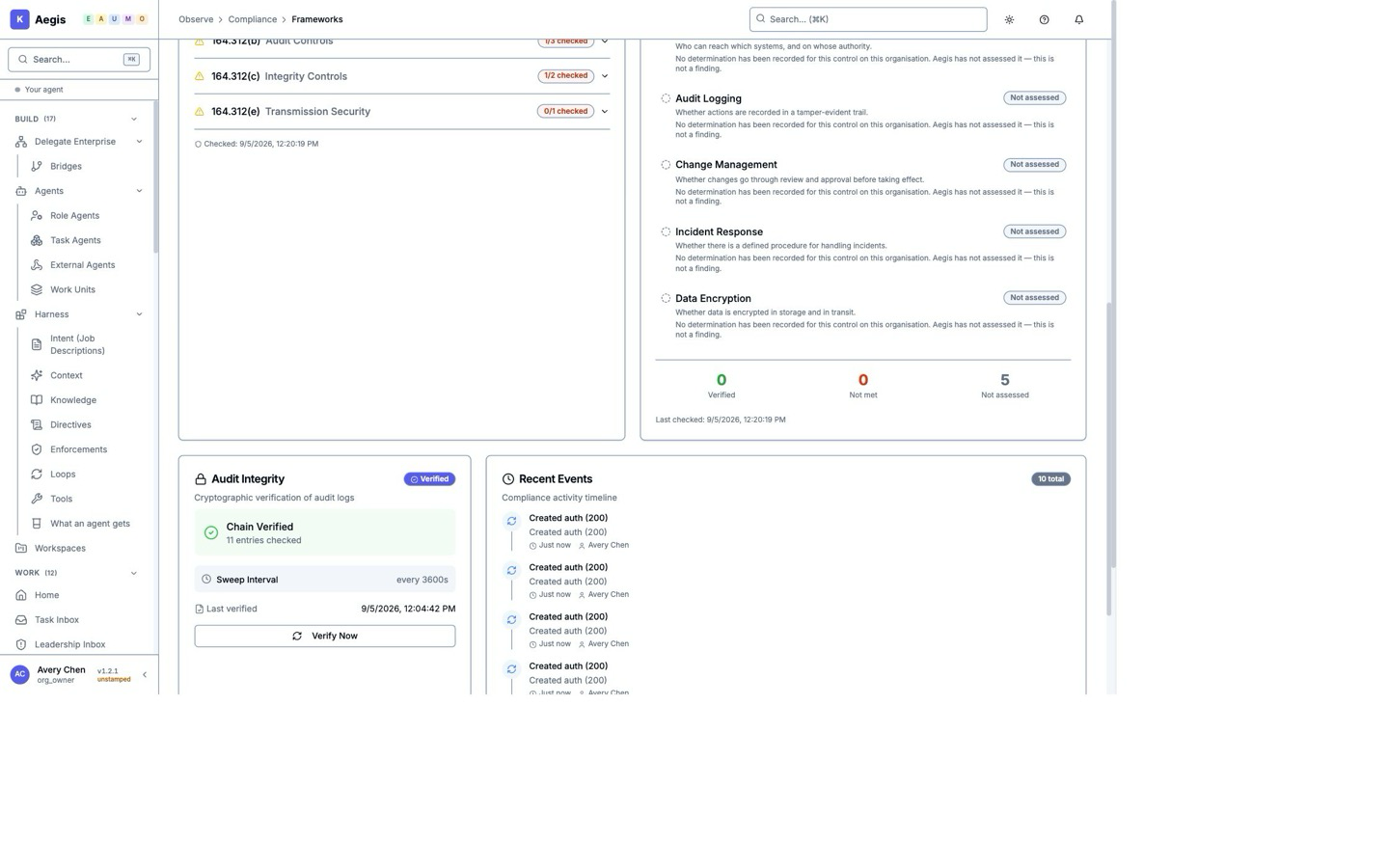
Independent assurance was not established in the separate audit-log capture. Aegis does not claim SOC 2 or ISO 27001 certification here. Compliance depends on the deployed controls, operating practices and applicable assessment.
An audit entry, a signed record and an authority check before execution establish different things. Confirm which verification ran, on which runtime, and whether it preceded or followed the action.
Request a review of the architecture, hosting and data flows. Confirm the documents and test access available for your evaluation.
Review how agents receive authority, where checks run and how identity and organization boundaries are enforced.
Identify the information processed, external services involved, retention settings and deletion requirements.
Your evaluation proposal sets out hosting, AI access and operating responsibilities, including the agreed support scope and any response targets. Agree who handles backups, updates and incidents, and confirm the tests needed before connecting business systems.
Control explanations and recorded decisions, integration setup and evidence, and the underlying specifications are available on this site.
For your evaluation, agree the deployment diagram, data flows, test access and operating responsibilities needed. Availability and scope of deployment-specific documents are confirmed during scoping; this page does not promise an independent assurance report.
Aegis is operated by Integrum. Company details →